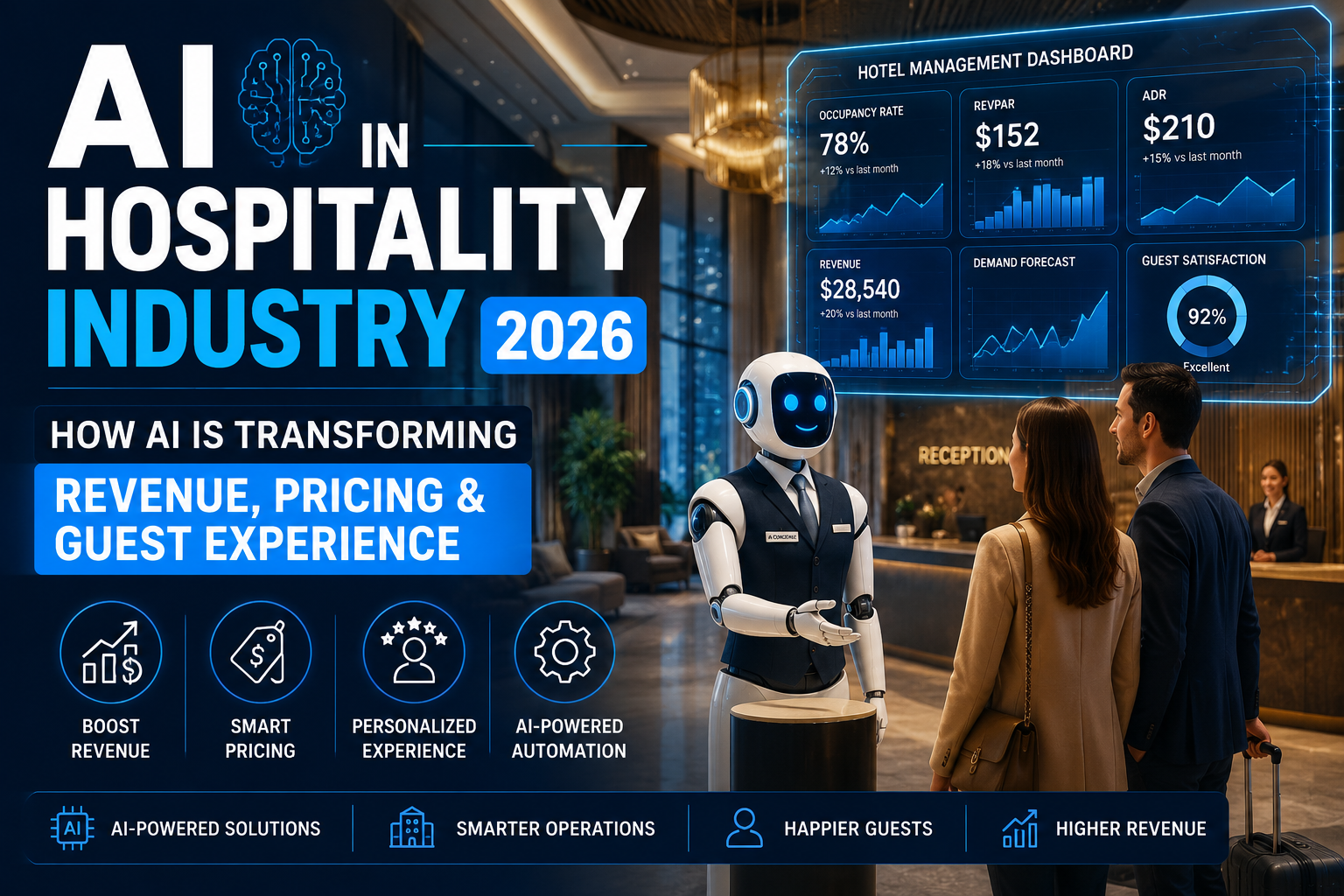
AI in Hospitality Industry: How AI Is Transforming Revenue, Pricing & Guest Experience in 2026
Introduction
The AI in Hospitality Industry trend is no longer futuristic — it is now a business necessity. In 2026, hotels, resorts, and hospitality brands are using artificial intelligence to automate operations, personalize guest journeys, optimize pricing, and maximize revenue.
From AI-powered revenue management systems to intelligent guest communication platforms, the AI in Hospitality Industry is reshaping how hotels operate and compete in a digital-first world. Modern travelers now expect seamless experiences, instant responses, and personalized recommendations — and AI makes all of this possible.
According to Hotelogix, AI-integrated property management systems are helping hotels improve automation, guest engagement, and profitability globally. (Hospitality Net)
For hospitality businesses looking to stay competitive, platforms like OTELYX are helping hotels modernize operations with advanced hospitality solutions tailored for evolving guest expectations.

What Is AI in Hospitality Industry?
The term AI in Hospitality Industry refers to the use of artificial intelligence technologies in hotels, restaurants, resorts, and travel businesses to automate tasks, analyze guest data, improve operational efficiency, and enhance customer experiences.
AI technologies used in hospitality include:
- Machine learning
- Predictive analytics
- AI chatbots
- Dynamic pricing systems
- Voice assistants
- Smart room automation
- Revenue management software
- Guest personalization engines
The primary goal of the AI in Hospitality Industry is to improve operational efficiency while creating personalized and memorable guest experiences. Hotels are using AI technologies to automate routine tasks, analyze customer behavior, and deliver faster services. One of the biggest transformations in the AI in Hospitality Industry is revenue management. AI-powered systems help hotels predict market demand, monitor competitor pricing, and automatically adjust room rates in real time. These smart pricing strategies help maximize occupancy and profitability. By using predictive analytics and automation, hotels can make better business decisions, increase revenue, and provide guests with a seamless and highly customized hospitality experience.
Key Benefits of AI Revenue Management
1. Dynamic Pricing Optimization
AI systems continuously monitor:
- Competitor pricing
- Seasonal demand
- Local events
- Booking patterns
- Occupancy trends
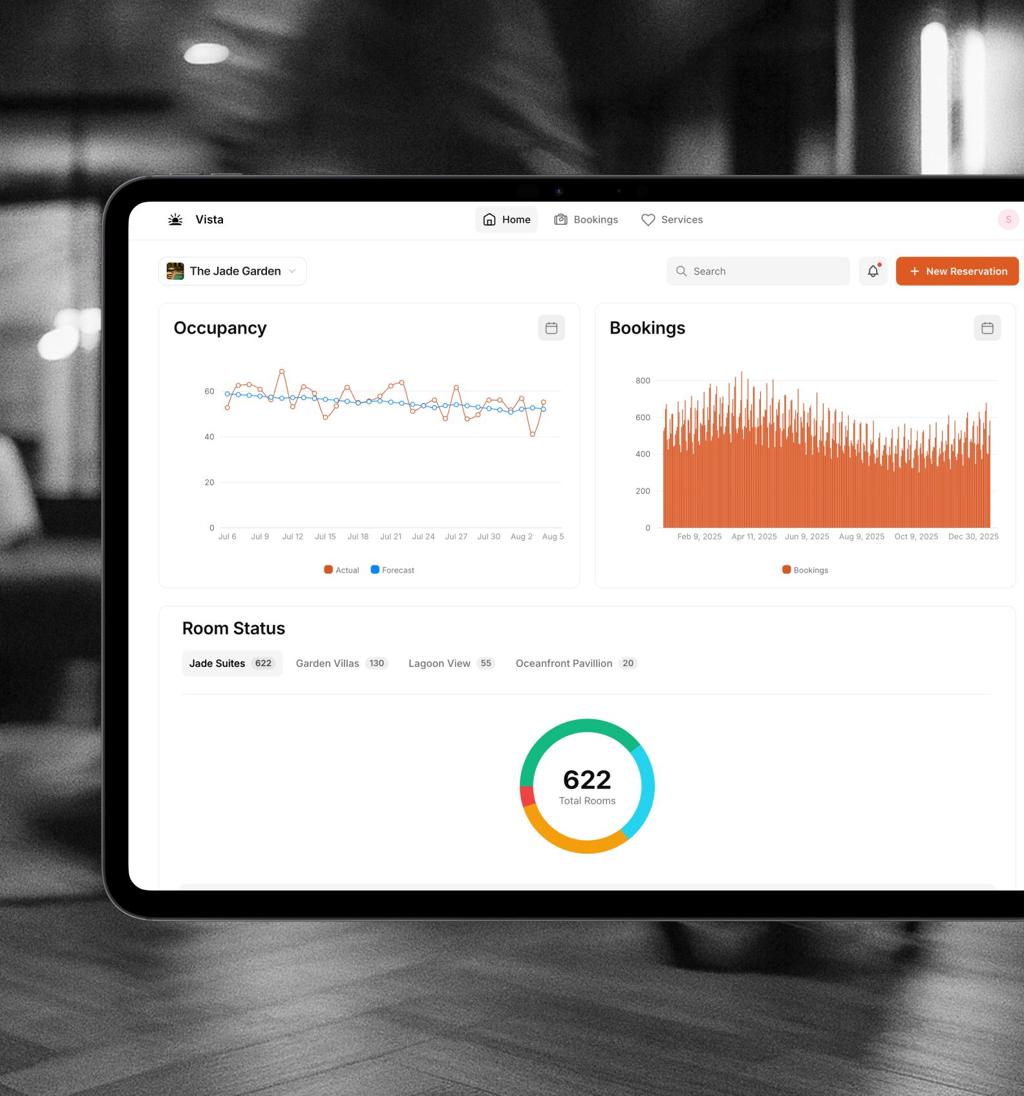
Using predictive analytics, hotels can automatically increase or reduce room prices to maximize occupancy and profits.
Modern revenue optimization platforms now allow hotels to make pricing decisions in seconds rather than hours.
2. Accurate Demand Forecasting
The AI in Hospitality Industry helps hotels forecast demand more accurately than traditional manual methods.
AI tools analyze historical booking data alongside real-time market trends to predict:
- Peak booking periods
- Cancellation probabilities
- Last-minute demand surges
- Traveler behavior
This helps hotels avoid underpricing or overpricing rooms.
3. Increased Profitability
AI-driven revenue management platforms can improve RevPAR (Revenue Per Available Room) by identifying hidden revenue opportunities.
According to hospitality technology providers like Outreachify, AI can also automate upselling opportunities such as:
- Spa packages
- Room upgrades
- Dining experiences
- Late checkout offers
Intelligent Hospitality Solutions for Guest Experience
Guest experience is the heart of the hospitality sector, and AI is dramatically improving it.
Personalized Guest Experiences
The Hospitality Industry Automation allows hotels to create hyper-personalized experiences based on guest preferences and past behavior.
Examples include:
- Personalized room settings
- Customized dining recommendations
- AI-generated travel suggestions
- Personalized promotional offers
AI systems can remember guest preferences such as:
- Favorite room type
- Preferred pillow
- Dietary requirements
- Check-in preferences
This level of personalization increases guest satisfaction and loyalty.
AI Chatbots and Virtual Assistants
AI chatbots have become essential in the Artificial Intelligence in Hotels because they provide 24/7 customer support.
Hotels now use AI assistants to:
- Handle reservations
- Answer FAQs
- Process room service requests
- Manage cancellations
- Offer multilingual support
Research on conversational AI in hotel bookings shows that AI systems can efficiently manage thousands of booking and customer service interactions every day. AI-powered chatbots help hotels provide instant responses, handle reservations, answer guest queries, and offer 24/7 support without delays. In the AI-Driven Hotel Management, chatbots also reduce staff workload by automating repetitive tasks. This allows hotel employees to focus more on personalized guest services, improving customer satisfaction, operational efficiency, and overall hospitality experiences.
Smart Hotel Rooms Powered by AI

Another major innovation in the AI Technology in Hospitality is the rise of smart hotel rooms.
AI-powered smart rooms allow guests to control:
- Lighting
- Temperature
- Curtains
- Entertainment systems
- Voice assistants
Hotels are increasingly using IoT and AI technologies to create smart and connected guest environments. These systems allow automated control of lighting, temperature, entertainment, and room services. In the Smart Hospitality Technology, IoT-powered hospitality solutions improve guest comfort, enhance personalization, and increase operational efficiency for modern hotels and resorts.
AI for Hotel Operations and Automation
The AI in Hospitality Industry is also transforming back-end operations.
Housekeeping Automation
AI systems help hotels optimize housekeeping schedules by analyzing:
- Room occupancy
- Check-out times
- Cleaning priorities
- Staff availability
According to Dextr AI, AI-powered housekeeping management can significantly improve operational efficiency and reduce manual workload. (Dextr AI)
Predictive Maintenance
AI can detect equipment issues before breakdowns occur.
Hotels use predictive AI systems to monitor:
- HVAC systems
- Elevators
- Kitchen equipment
- Energy systems
This reduces maintenance costs and prevents service disruptions.
Energy Management
The AI-Powered Hospitality also supports sustainability goals by optimizing:
- Energy usage
- Water consumption
- Waste management
AI-powered systems automatically manage energy consumption based on room occupancy, helping hotels reduce operational costs and improve sustainability. In the Hospitality AI Solutions, post-pandemic trends have also accelerated the adoption of contactless services. Hotels now use AI-driven technologies such as mobile check-ins, digital room keys, and automated guest support to enhance convenience, safety, and overall customer experience.
AI now enables:
- Mobile check-in/check-out
- Facial recognition access
- Digital room keys
- Voice-controlled services
- Automated concierge systems
According to Intelity, unified AI guest experience platforms help hotels improve digital communication and deliver seamless mobile-first services. In the AI in Hotels and Hospitality, contactless hospitality solutions such as mobile check-ins, digital room keys, and AI-powered guest support enhance convenience, improve operational speed, and ensure better guest safety while creating a smoother and more personalized hotel experience.
Case Study: How AI Increased Hotel Revenue and Guest Satisfaction
AI Revenue Optimization Success Story
A mid-sized luxury hotel implemented an AI-based revenue management and guest engagement platform in 2025.
Challenges Faced
Before implementing AI, the hotel struggled with:
- Inconsistent pricing
- Low upselling conversion
- Delayed guest responses
- High operational costs
AI Solution Implemented
The hotel introduced:
- Dynamic pricing software
- AI chatbot support
- Predictive occupancy forecasting
- Personalized guest communication
Results After 6 Months
The results were impressive:
- 18% increase in room revenue
- 22% improvement in upselling conversions
- Faster guest response times
- Higher online review ratings
- Reduced operational workload
The success demonstrates how the AI for Hospitality can directly impact both profitability and customer satisfaction.
Hospitality AI providers report that intelligent guest communication systems and automation tools significantly improve operational efficiency and customer experience. (Outreachify)
Challenges of Artificial Intelligence in Hospitality
Although the AI in Hospitality Industry offers major advantages, there are still challenges hotels must address.
Data Privacy Concerns
AI systems collect large amounts of guest data, creating privacy and cybersecurity risks.
Research highlights the importance of secure AI and IoT implementation in hospitality environments. (arXiv)
High Initial Investment
AI implementation can require substantial investment in:
- Software
- Hardware
- Staff training
- System integration
However, long-term ROI often outweighs initial costs.
Human Touch Still Matters
Hospitality is built on emotional connection. While AI improves efficiency, hotels must balance automation with genuine human interaction.
The best hospitality strategies combine AI-powered efficiency with personalized human service.
Future Trends of AI in Hospitality Industry in 2026
The future of the AI in Hospitality Industry looks highly promising.
Emerging AI trends include:
- AI-powered robotic concierge services
- Voice-enabled hotel rooms
- Emotion recognition technology
- Predictive guest personalization
- AI-driven travel recommendations
- Autonomous hotel operations
Hospitality experts believe AI will continue transforming how hotels manage pricing, staffing, guest engagement, and operational efficiency.
As guest expectations evolve, hotels that adopt AI early will gain a major competitive advantage.
Why Hospitality Businesses Should Invest in AI
Hotels and hospitality brands investing in AI today are positioning themselves for long-term growth.
The benefits of the AI in Hospitality Industry include:
- Higher revenue
- Better pricing strategies
- Improved guest experiences
- Reduced operational costs
- Faster customer support
- Increased guest loyalty
- Smarter business decisions
Companies like OTELYX help hospitality businesses modernize their operations with innovative hospitality solutions designed for future-ready hotels.
Conclusion
The AI in Hospitality Industry is transforming every aspect of hotel operations in 2026 — from revenue management and dynamic pricing to guest personalization and operational automation.
AI is no longer optional for modern hospitality businesses. Hotels using AI-powered systems can improve efficiency, maximize revenue, reduce costs, and deliver exceptional guest experiences that modern travelers expect.
As technology continues to evolve, hospitality brands that embrace AI will lead the future of the industry.
Whether it is smart pricing, predictive analytics, AI chatbots, or intelligent guest experiences, the impact of the AI in Hospitality Industry will only continue to grow in the years ahead. For hospitality businesses looking to stay ahead in this competitive market, investing in innovative solutions from OTELYX can be a strategic step toward digital transformation and long-term success.